World Cup 2026: The History of DR Congo and the Rumble in the Jungle
DR Congo's 2026 World Cup campaign brings to mind their ill-fated debut in 1974 and the famous boxing match between Muhammad Ali and George Foreman, known as Rumble in the Jungle, which took place in Kinshasa.
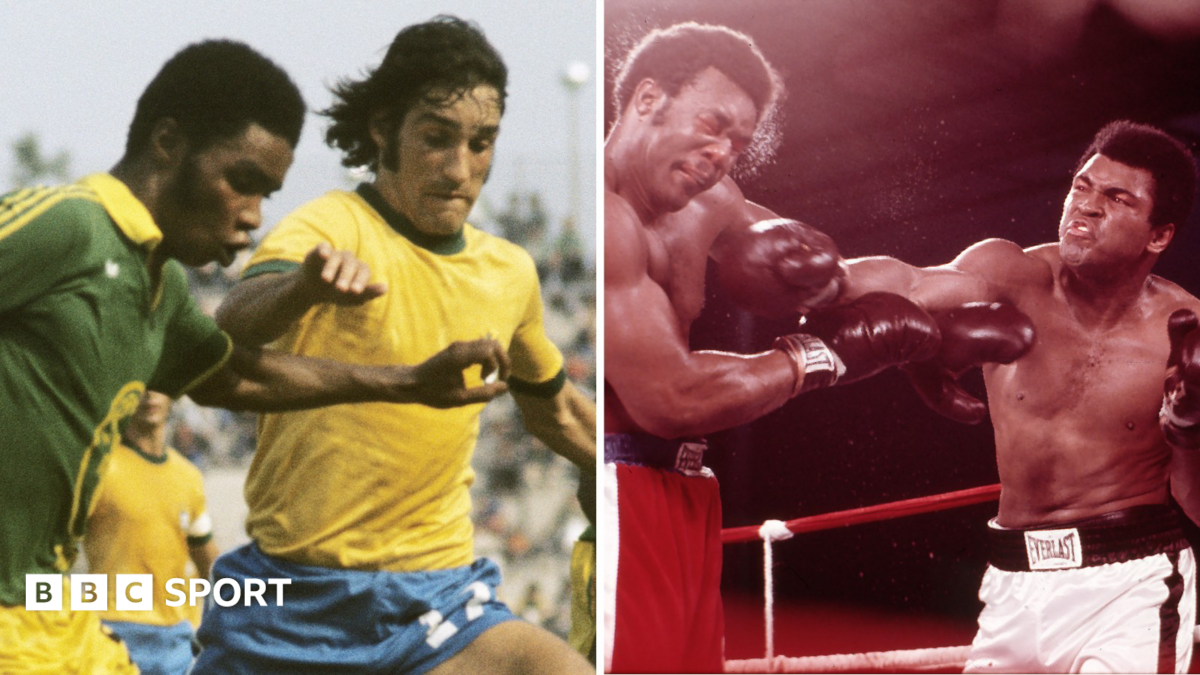
Three games, three defeats, 14 goals conceded and no goals scored — the DR Congo team's debut at the 1974 World Cup was truly one to forget. The first sub-Saharan African team to qualify for the finals, the country then known as Zaire lost 2-0 to Scotland and 9-0 to Yugoslavia before facing an infamous moment in their final group game against Brazil. Trailing 2-0 late in the second half, defender Mwepu Ilunga came out of the defensive wall as the champions saved a free kick and fired the ball away. The right-back was cautioned and ridicule followed, including suggestions that the Zaire players did not even know the rules of the game. Almost 40 years later, Ilunga revealed that it was an act of protest. "I was aware of the rules of football. I did it on purpose," he told the BBC in 2010, five years before his death.
Later, in 1974, the eyes of the world turned once again to the Central African country, when its capital, Kinshasa, became the stage for one of the biggest sporting events of all time: the heavyweight fight between Muhammad Ali and George Foreman, which became known as the Rumble in the Jungle. "Geopolitically, President Mobutu really achieved a media coup, because his country was discovered and became known throughout the world", recalls journalist Justin Kabala Mwana, who covered the event. Now, 52 years after one of the country's darkest sporting chapters and one of its most celebrated moments, DR Congo face England in the round of 32 round of this year's World Cup on Wednesday (5pm BST). And just like Rumble in the Jungle, Kabala sees the game in Atlanta as an opportunity for a country that has been severely affected by conflict and corruption over the decades to "regain its unity and dignity."
Congo gained independence from Belgium in 1960, but Mobutu seized power in a military coup in 1965, renaming the country Zaire six years later. As the president used his power to amass a huge personal fortune, the local economy suffered. "The price of copper plummeted drastically. Gasoline stopped flowing at the pumps and the World Bank got involved to guide Zaire's economy", recalls Kubala. "It was a crisis."
However, the country's players were making their mark on the continental scene, winning three African club titles between 1967 and 1973, the Africa Cup of Nations in 1968 and 1974, and then qualification for the World Cup. President Mobutu rewarded the team members with a house and a car each and assured them that preparations for the World Cup were in order. "President Mobutu welcomed us," former Zaire striker Mayanga Maku told BBC Sport Africa. "We moved away from our respective clubs and focused exclusively on the national team. He was the one who drove everything. We were on the right path until we got there."
Zaire traveled to West Germany in June 1974 on a high after winning his second Afcon title three months earlier, but all was not well behind the scenes. The players initially refused to play against Yugoslavia in protest over unpaid aid received from FIFA, which they accused federation officials of spending. "We weren't a bad team. If we got to the World Cup, it was by providence," reserve goalkeeper Mohamed Kalambay told Sporting Witness in 2022. "We were missing one little thing: recognition. Nowe receive our bonuses. You have no morals to play. And that's what happened to us."
The players took to the field against Yugoslavia, but were soundly defeated, with goalkeeper Kazadi Mwamba being substituted in the 21st minute, when the score was 3-0, and striker Pierre Ndaye Mulamba being sent off shortly afterwards. Then came his final group match against Brazil and Ilunga's moment that went down in football history. "I don't regret it," he said. "I wanted to get a red card so I could leave the field. Why should I play for the benefit of our football association officials who took the players' money provided by FIFA? But I couldn't do it, the referee didn't give me a red card."

A few months after their World Cup disappointment, Zaire rolled out the red carpet for two of boxing's biggest stars. Ali had been stripped of his world titles in 1967 and banned for three and a half years after refusing to fight for the US Army in Vietnam. Four years after his return to the ring, he was still looking to regain his undisputed heavyweight title. Through promoter Don King, President Mobutu paid Ali and Foreman $5 million to hold the fight in Kinshasa. "Mobutu said that his country's dignity was priceless and that he was willing to pay whatever was necessary," Kabala said. "The entire country was mobilized to host this superfight of the century, as if to raise the challenge. President Mobutu spared no effort to ensure that everything ran smoothly. He was absolutely determined to put himself on the world stage."
Kabala remembers a carnival atmosphere in a packed 20 May stadium, with most locals supporting Ali. Those present on 30 October witnessed an incredible fight, as Ali absorbed everything Foreman threw at him, with his 'rope-a-dope' tactics designed to tire out his younger opponent. Near the end of the eighth round, Ali dropped Foreman with a devastating combination to regain the heavyweight title. “That day was a nationwide celebration,” Kabala said. "People were partying all night. The beer flowed freely for up to 48 hours after the fight. Zaire took a little breath. Except economically, that wasn't really the case. You could feel that once the party was over, it was goodbye to the good times."
In 1997, Mobutu's time in power ended and the country was renamed the Democratic Republic of the Congo. Two wars, which raged from 1996 to 2003, involved nine different African nations and claimed up to six million lives. Those years were also cruel for the Zaire players of 1974. Ilunga said the team returned home "without a penny" — and in 2002 claimed he was "living like a bum" — while star striker Ndaye was shot in the leg during a home invasion in 1996 and ended up moving to South Africa.
It took 52 years for DR Congo to return to the World Cup, having come close to qualifying for the 2018 and 2022 editions. The Leopards have been strengthened by recruiting players from their diaspora, a tactic used by several African nations in recent years. Only six of those called up were born in the Democratic Republic of Congo and none of them play in the domestic league, which has suffered over the years due to poormanagement by the football federation (Fecofa). However, French coach Sebastien Desabre has achieved impressive results based on consistent team selection and strong team spirit since taking over in 2022. The current team has managed to achieve what the 1974 Leopards would have aimed for – a first World Cup goal and point against Portugal on their debut, and then a first victory against Uzbekistan to reach the knockout stages.
DR Congo still faces its difficulties today, with conflicts in the east of the country and a recent outbreak of the Ebola virus affecting preparations for the World Cup. "When we were here last time, our shirts were different, the country was known as Zaire, it was a completely different time," fan Tanya Maria told BBC Sport Africa in the United States. "The World Cup gave people an investment in our country. And I think when people care about a country, when they care about the people who live there, that's when change can happen."
There is hope that Fecofa's new leadership, elected in May, can build on World Cup qualification and revive the domestic league. Conditions are also much better for the players. "We are very privileged to have everything we need," defender Axel Tuanzebe told the BBC, shortly before scoring the crucial goal that secured the team's place in the World Cup via an intercontinental playoff against Jamaica in March. "We're not lacking anything and this allows us to go out and perform to the best of our ability."
Those called up know that they are playing for a greater cause than simple success on the field. "It's not easy in our country," said striker Yoane Wissa after the victory over Uzbekistan. "There is a war in Eastern Congo. Every day, every time we wear this shirt, we think of them. Because we want peace and, to them, I can only say 'thank you'. Thank you because we came from far away. We came from nothing to be here. Now we write our history." For Kabala, Wednesday's round of 32 match is "almost" bigger than Rumble in the Jungle. The Leopards could certainly deal a huge blow to England's ambitions of winning their second world title.