World Cup 2026: How does qualification for the round of 16 work?
The article explains the qualification process for the round of 16 of the 2026 World Cup, detailing the new rules and possible clashes as the teams fight for qualification.
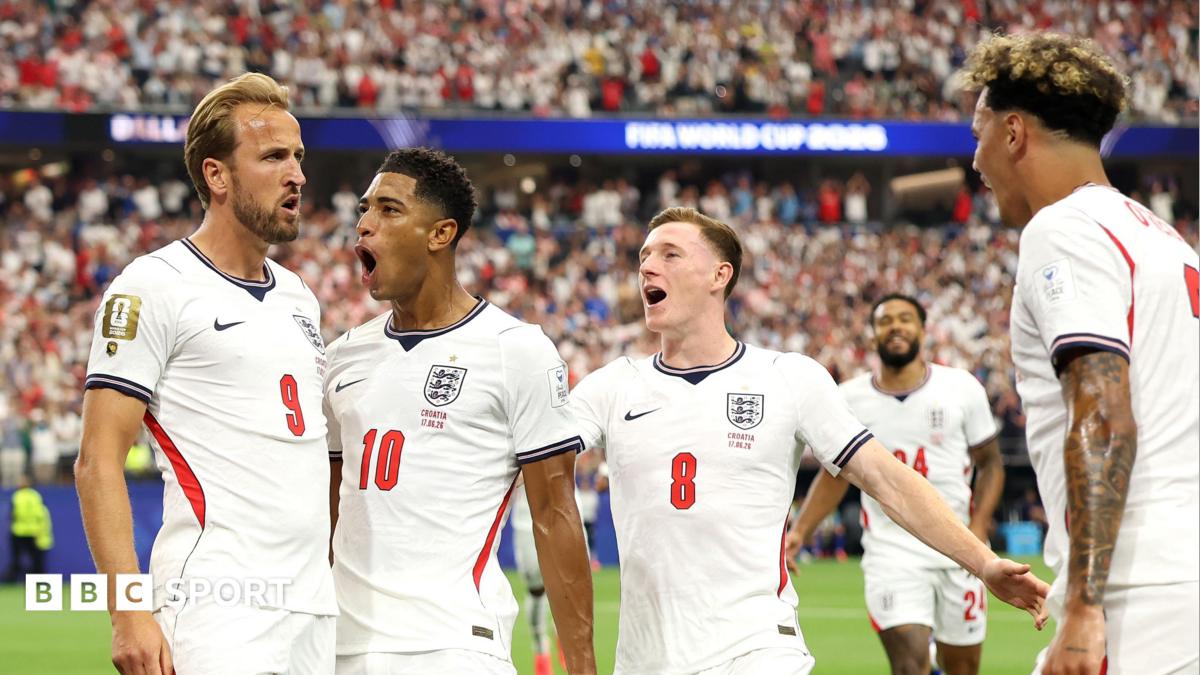

While the best football players in the world do their best to secure a place in the final stages of the 2026 World Cup, fans around the planet are trying to understand how the round of 16 clashes work. With an expanded tournament to 48 teams, new tiebreaker rules and three host countries in four different time zones, it is difficult for even the most die-hard fans to follow the schedule, let alone the casual spectator who is usually interested in major tournaments. Given the 495 possible match combinations involving the eight teams that will advance as third-placed teams, you can forgive anyone who doesn't understand the new format. To make the situation easier, BBC Sport developed a predictive tool that updates during games to illustrate the schedule leading up to the final. So, how does a team qualify for the next round and how is the draw shaping up so far? Let's take a look at the (hypothetical) future. In the next eight days, the group stage of the World Cup will come to an end. Of the 48 teams, 16 will be eliminated, leaving 32 countries - the same number as the tournament had from 1998 to 2022. The two best teams from each of the 12 groups will advance to the round of 16. Two of the tournament's co-hosts, Mexico and the United States, have already secured their places with back-to-back victories - a big plus for the organizers, which keeps the local crowd excited. Naturally, whoever has the most points leads the group, but it's when two or more teams end up tied on points that things get complicated. Goal difference, which has been FIFA's chosen tiebreaker since 1970, is now replaced by head-to-head results between teams, a method long favored by UEFA. Traditionalists may be horrified, but supporters say head-to-head is a fairer comparison between equal teams than goal difference, which is often skewed by thrashings meted out to weaker teams. If a team tied on points with another defeated them in the group stage, the winners will finish higher in the table. When several teams finish tied on points, a mini-league is created, eliminating the results against the other teams. These tied teams are ranked by points scored in games against each other, then goal difference, followed by goals scored. If that doesn't work, the next criteria are goal difference and goals scored - for the group as a whole. Still tied? FIFA's famous 'Team Conduct Score' (TCS) comes into play. What may be commonly referred to as a team's record of fair play or discipline, each nation started the tournament with zero and has points deducted for cards shown to players or - be careful, coaching staff - to team officials, as follows: Yellow card -1 Red card for two yellows -3 Straight red card -4 Yellow followed by straight red -5 The closer to zero, the better the score. South Africa, for example, has the worst TCS of the tournament so far, at -12 after receiving two straight red cards and four yellow cards. At this stage, 14 selections remain with zero. The same criteria will be applied to determine the rankings of the 12 third-placed teams, only eight of which will advance to the round of 16. Fourof the group winners will play against the runners-up. The other eight group winners will face the teams that advance as third placed. The remaining runners-up will play against other runners-up. The match schedule already defined by FIFA lists five potential options for each of the eight round of 16 clashes involving the third-placed teams. The best third-placed teams among these options are assigned to their places, in numerical order of the games, until the formations are complete. For example, the winners of Group E from Germany will play in game number 74 against the best third-place team from Groups A, B, C, D and F. Throughout the draw, there are a staggering 495 potential combinations. The most optimistic fans may have already started to plot their teams' path towards the final at the New York New Jersey Stadium on July 19, a task that is once again made easier by our predictive tool. Currently, England, who top Group L, would play Portugal, who are third in Group K, in Atlanta on July 1st. The path to the final for Thomas Tuchel's team, assuming the favorites progress in each hypothetical clash, would currently involve overcoming Portugal, Spain, France or Brazil, and Argentina - no easy path for any title hopeful. Group C, featuring Scotland, who are currently the highest ranked of the 12 third-placed teams - only four of whom have played twice - would face Group E leaders Germany in Boston on 29 June. Their draw part is not as loaded with quality. Scotland or Germany could face the Netherlands in the round of 16, Morocco would feel confident of making another deep run, while the United States, if it maintains its momentum, has a chance of reaching at least the quarter-finals. Clearly, the current forecast comes with the huge caveat that a lot will change in the coming days. The third place situation will not become fully clear until the final group games are completed on June 29th. Every point, every goal and even every card really counts.