World Cup 2026: What's behind Scott McTominay's low-key start for Scotland?
Scott McTominay's World Cup performance has sparked debate about his contributions and expectations as Scotland face tough opponents.
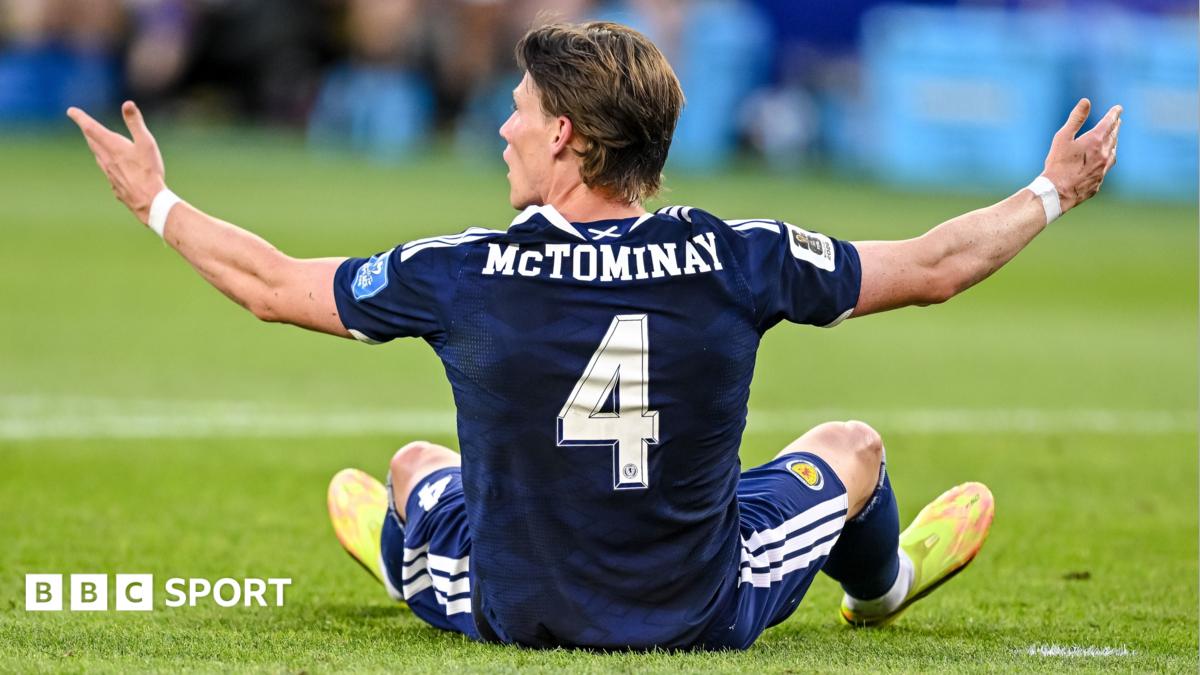

Standards are falling here in Boston. The Scotland team are two games into their World Cup campaign and there has been no sign of an acrobatic shot anywhere. Scott McTominay lit up the world with the spectacular against Denmark last November, a moment that typified the brilliance of the man who has stood out in Naples. That moment triggered one of the magical nights in Glasgow that took Scotland to America, the first World Cup in 28 years that has so far brought one narrow victory and one narrow defeat. In both matches, the nation's poster boy has been low-key in his influence, but what impact is the 29-year-old midfielder having? Is he the man in dark blue who can take Brazil down, and is it fair to expect that from him? During his 72 international appearances, the Napoli hero racked up 15 goals and two assists, but these numbers do not reflect his contribution. He has been the man for big occasions in many matches. His first goal was a winner in 2021 against Israel, it was his two goals that toppled Spain at Hampden, and of course we had that night against the Danes. Now, at the World Cup, the expectation that he will decide matches - along with Tartan Army hero John McGinn - is huge. Against Haiti, where McTominay even hit the post for a stunning goal, the BBC Sport audience rated three players better than him, while against Morocco a rating of 5.09 had seven Scots ahead of him. But is this fair? Against Haiti, McTominay had a pass completion rate of 93% - the second highest in the starting lineup - dropping to 89% on Friday night - the third highest on the team. He had two shots on goal in both matches, one more than he managed against Denmark in November when he was a hero. Against Haiti, McTominay covered more than 12km, the furthest distance of any player on the field. Against Morocco he was only surpassed by 369 meters more than Lewis Ferguson. An upset stomach was the story that struck fear into the Scottish support that invaded Boston before its opener, but he still played. Did he command the game? No, still, an underwhelming Scotland managed to win 1-0. Against Morocco, the Scots were surprised by a lightning start from the Africa Cup of Nations winners, which undoubtedly shook them. But as the game progressed, from just before half-time and into the second half, their control over the match grew, albeit without the clear-cut chances that presented themselves at the other end. Without a doubt, McTominay's greatest attributes are in the attacking areas. It's been a long time since Steve Clarke played him at centre-back. His lethal eye for goal, his talent for being in the right place, his strength to overcome an opponent and arrive in time. It is no coincidence that the former Manchester United player's least influential moments came at times when Scotland were on the defensive. For much of the game against Haiti, Scotland were not advancing into the final third with purpose, or working the ball effectively. They received the ball 77 times in the final third compared to 116 at the other end. The second half against the Moroccans was perhaps Scotland's boldest display in their three tournament appearances under Clarke and McTominay, and their participation began toto grow. “I watched a bit of Scott,” former Scotland winger Pat Nevin said of McTominay at Napoli and Scotland. "Scott is not Billy Gilmour. He's not going to run and control the game and pass. He can pass, he can do all those things. But is he going to be a technical player who controls the game? No, he's not going to be that. Is he going to be world class when he gets into the box? Yeah, like a 10 or an 8. And he's very, very good at other things and his willingness to work is fantastic. So when you say, 'oh he hasn't done that so far', well, we weren't up there on that one. end of the field. So it's kind of difficult to do that." Although there was still no constant pressure of possession in the second half, the graph below is evidence that Scotland were much more effective in the final stages of the game as an attacking entity. The loss of Gilmour is a key point to consider when talking about McTominay's effectiveness. Lewis Ferguson was used in his place, and the Bologna man is perhaps Scotland's best player in the two matches so far. But while he has mostly been used in a position of contention, his license to engage his energy in unleashing the likes of McTominay and McGinn is perhaps stifled. This is something that changed towards the end against Morocco with the introduction of Kenny McLean in the 71st minute, which allowed Ferguson to explore further. Former Scotland international Leanne Crichton suggested: "I think we played with bravery and quality and composure in flashes and when that happens I think that's where Scott McTominay is at his best. I think you can see his qualities, he's absolutely there. If Scott McTominay has been marked and doubled at certain times, players are tracking those runs that he normally makes, so it's up to other players around him to recognize it and make better decisions with the ball. I think that's probably where we failed at certain moments in the game." Nevin added: "He's not a game controller like that. Some of the best players in the world aren't like that. In midfield, it's different things. And he has a great specialization, which is a world-class specialization. But you need to be in a position to play so that he can use that to the best of his ability. And we weren't really in a position to do that because we weren't in the final third to do it. So I definitely wouldn't make any attacks on Scott. He's doing a hard job."