World Cup 2026: Which team has traveled the furthest?
England stands out for having traveled significantly more than its rivals at the 2026 World Cup, raising questions about the impact of distance on players' performance.
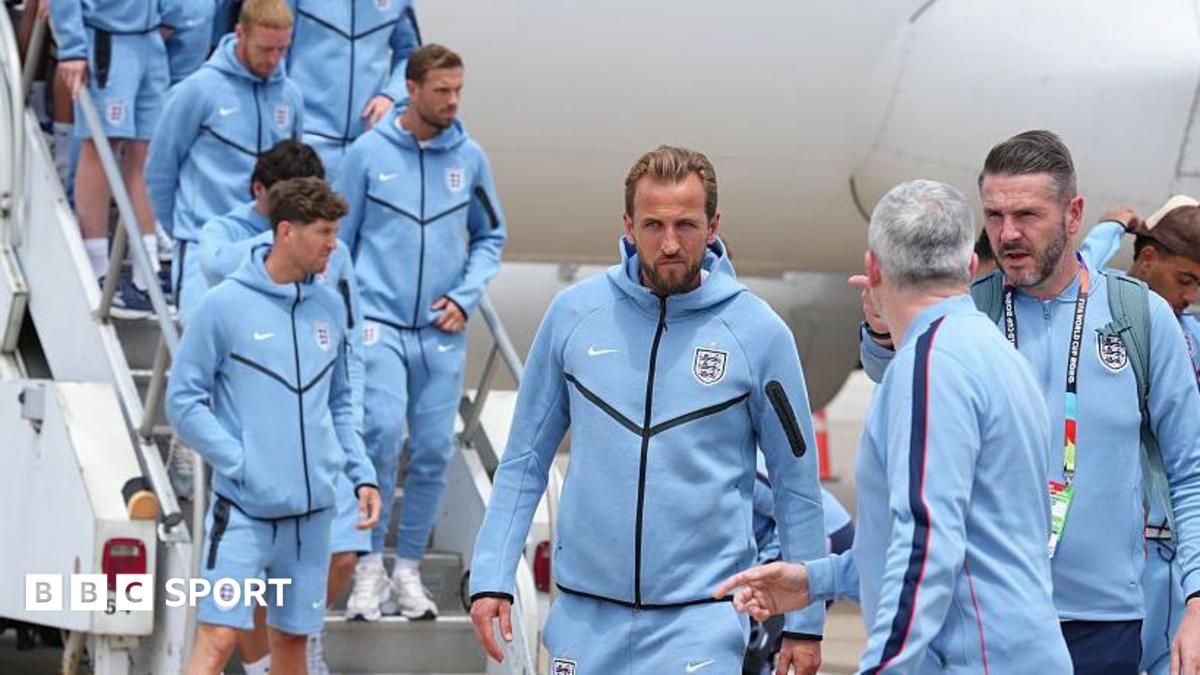
World Cup 2026: Which team traveled the furthest?
According to Bbc.
Why this matters
The distance covered by England at the 2026 World Cup could have a significant impact on the performance of players, including stars such as Harry Kane. Physical exhaustion and adaptation to different time zones are factors that can influence performance in decisive matches, especially in the semifinals against Argentina. Furthermore, this situation raises questions about the logistics and planning of teams in future tournaments.
Main conclusions
- World Cup 2026: Which team traveled the furthest?.
- England stands out for having traveled significantly more than their rivals at the 2026 World Cup, raising questions about the impact of distance on players' performance.
- Harry Kane remains central to England's plans.
Long trips are nothing new at World Cups. Brazil in 2014, Russia in 2018 and even South Africa in 2010 required teams to cover significant distances. However, this first 48-team World Cup presented a different challenge. With matches taking place in three host countries and 16 cities, some teams spent weeks traveling, while others remained inmore stable regions.
England's journey illustrates this difference well. Its trajectory has already surpassed the total distance covered by countries in other tournaments. However, for the English, the move had an impact on their tournament experience in Kansas City. The squad adapted to life in Prairie Village, training at the Swope Soccer Village and becoming involved in the local sports culture. Players including Tuchel, Harry Kane, Dan Burn and Djed Spence visited the Kansas City Royals, with the manager throwing out the first pitch at Kauffman Stadium and receiving personalized team t-shirts.
After a dramatic 3-2 victory over Mexico, the team had around 36 hours free to explore the city. It is difficult to assess precisely how travel distance influences performance, but Stale Solbakken, coach of Norway, who reached the quarter-finals, admitted that the physical demands of the tournament had started to take effect. “We only really had Jorgen [Strand Larsen] down with a fever, but there was a bit of a cough and cold spread among the players,” Solbakken said. "But there's air conditioning, flights, changing rooms and everything. There are 50 people in the traveling group, so it would be strange if something didn't come up."
Norway's journey was considerably shorter than England's. After starting the tournament from a base in Greensboro, North Carolina, the team eventually stopped returning between games as the knockout stages progressed. Meanwhile, the English continued to fly back to Kansas City after each match. Whether these accumulated miles became a deciding factor or not will never be fully clarified, but it is undeniable that France has recorded a remarkably low number of air miles compared to the other semi-finalists. According to BBC Sport, distances were calculated between training camps and match venues, using the nearest airport and assuming that each nation returned to its camp after each game. We use an air mile calculator to measure flight distances and double the mileage to account for teams returning to their training location between matches. For nations whose closest airport to their training camp was the same as a venue where they were playing, we considered this as zero miles, regardless of the distance from the camp to the stadium. Therefore, the results are an indicator of the distances covered during the World Cup so far, and not an exact number.
What happens next
With England progressing to the semi-finals, the team will need to carefully manage players' recovery after extensive travel. The next challenge will be to face Argentina, which, despite having traveled less, is also a strong competitor. The performance of Harry Kane and his team-mates will be crucial in determining whether England can overcome the odds and progress to the World Cup final.