World Cup 2026: Steve Clarke resigns leaving a strong legacy
Steve Clarke resigned as Scotland manager following their World Cup exit, leaving a legacy of improvement but unfulfilled potential.
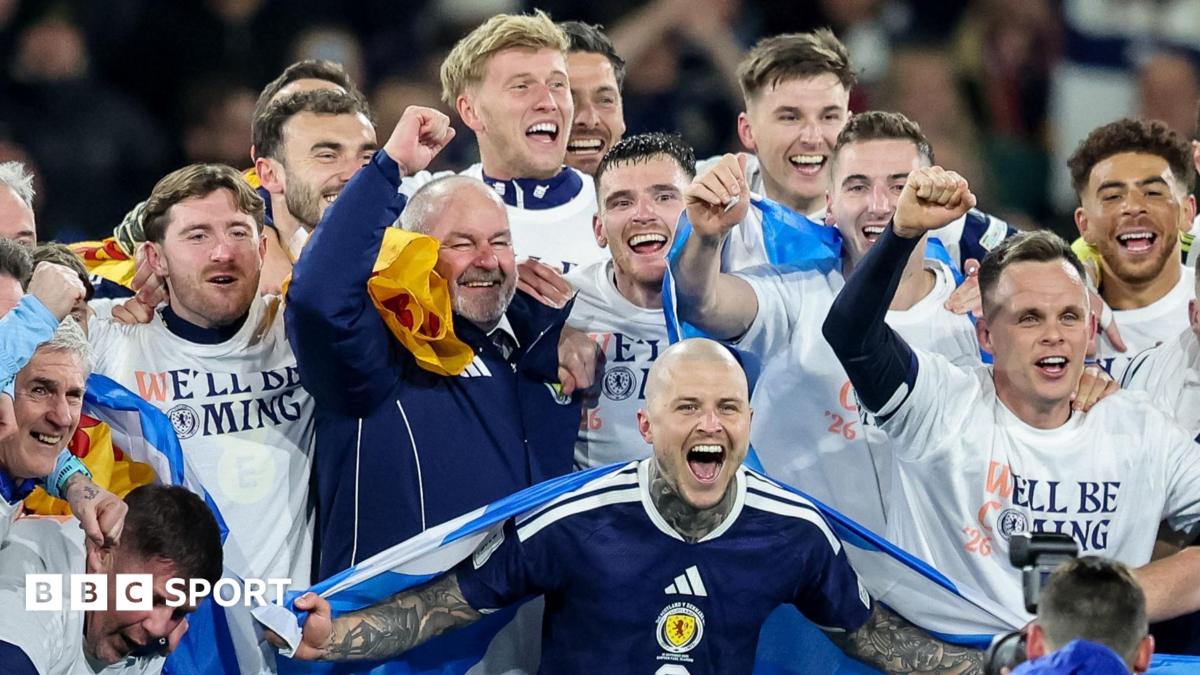

Last Saturday, Charlotte's skies were a dirty gray, the rain was falling hard, the wind was blowing fiercely, and there was thunder and lightning every minute. If Steve Clarke were to look out his hotel window, he would witness this biblical scene, an ideal setting for a bombshell announcement. Minutes after Scotland were officially eliminated from the World Cup, the news of the coach's departure fell like a bomb. Unlike the weather, there was no advance notice. The way he left was typical of him: discreet, without fanfare, without interviews yet, without the need to explain his thoughts beyond what he has already done. The length and details of his farewell statement suggest that this decision had been in the works for a day or two, but there is no explanation as to why the choice was made so abruptly. Why not go home, take some time and think about it? Quick decisions and emotional reactions are not Clarke's characteristics, so why did he do this now? The players had no idea this was coming and many on the Scottish Football Association board had no idea either. A month ago, these same people announced, with great fanfare, that Clarke would stay on for another four years. There is a group of people in football who didn't want it to continue, but they maintained civility. Another group just doesn't like him and never has. He angered some Rangers fans by mocking them for sectarian chants when he was Kilmarnock manager, claiming they were trapped in the Dark Ages, and many of them have neither forgotten nor forgiven. And now he's gone. His legacy is very good, but there is a certain relief that there is a new voice and new ideas, as long as a good hire is made, which is very uncertain. Seven years is an eternity. For the Scottish Football Association, there is some pain at the fact that the coach they committed to for another four years just last month is now gone. For Clarke's critics — both the balanced and the extreme — there is an element of caution about what they want, as there are no excellent, realistic candidates out there. Those responsible at Hampden are under significant pressure to get the new manager right from a limited group. Scotland have six Nations League games between September and November. Clarke will only be a memory until then, but he was a significant force for Scotland for a long time, a coach who lifted the team out of darkness but never took them to the promised land of major league football. That was his goal in America and he failed. Three major championships in seven years, with many good moments — amidst many bad ones. Scotland struggled in all these tournaments but managed to get there. People may scoff at that now, but they have short memories. These ratings brought millions of pounds into the Scottish Football Association's coffers. The nation had forgotten what it was like to reach that level before Clarke arrived. A desperate fatalism had taken root in football. There was no hope, only cynicism. Two matches before he took over, Scotland lost 3-0 to Kazakhstan. It was pathetic. In his first game in charge, a late, drawn-out victory against Cyprus, an attendance of 31,277 attended Hampden. In subsequent home games, 32,432 attended the 2-1 defeat toRussia, 25,524 saw Belgium win 4-0, 20,699 were at Hampden to see the victory over San Marino and 19,515 were present for the victory against Kazakhstan. Clarke referred to this era in his farewell message. Apart from a loyal band of Tartan Army members, there was total indifference. The ups and downs under Clarke were remarkable. He was a coach with the ability to bounce back. Scotland experienced a stratospheric high with consecutive penalty shootout victories to qualify for the Covid-postponed Euros, only to fail miserably once they got there. Clarke rose again with a strong bid to reach the 2022 World Cup, winning six competitive games in a row for the first time since 1930. They defeated Denmark along the way and secured a home semi-final against Ukraine — and failed. They failed again, losing 3-0 against the Republic of Ireland in the Nations League that followed. Andy Burke, Pat Nevin and Tom English react to Clarke's departure. These were dangerous times for Clarke. The knives were out, but he rose again in the 2024 Euro qualifiers. The campaign was exciting and Hampden vibrated like rarely before. They beat Spain at home and, memorably, defeated Norway in the final minutes away from home. The night they beat Georgia in the Glasgow monsoon was one of the most memorable of the entire Clarke regime. For Germany in Euros; another horrible experience, culminating in a 1-0 defeat to Hungary. Clarke was negative and his team sank without a trace. He reacted badly after that. This failure and the brutality that followed cost him much of the support he had. He was in trouble again. The coach with multiple chances stood up once again. Better to have ups and downs than to have nothing. The Nations League campaign ended with a draw against Portugal and victories over Croatia and Poland. Things were heating up again. Luck was on his side. In World Cup qualifying, Scotland were horrible against Greece at home and won, horrible against Belarus at home and won again. These were the performances that John McGinn called a "jobby", which is Scottish slang for what disappears down the toilet. They lost in Greece and would have been in the playoffs if not for a miraculous Belarus draw against Denmark in Copenhagen. They capitalized on that extraordinary good fortune in the epic home game against the Danes — one of the biggest nights in the team's history. This was happiness before the brick wall of America. Now the search begins for a coach who can do what Clarke did, but do it better. The squad is aging, being one of the oldest in this World Cup. Scotland's three goalkeepers in America had a combined age of 103. Lyndon Dykes and Lawrence Shankland are both 30 years old, with five other players joining them soon. John McGinn, Ryan Christie and Jack Hendry are 31, Andy Robertson is 32, Grant Hanley and Kenny McLean are 34. The new manager will have problems in goal and at the back. There is a lack of creative and dynamic midfielders, a lack of wingers with real pace and a serious problem creating chances for attackers who are forced to live on scraps. Scotland has come a long way under Clarke, but the road to where they want to be still stretches many miles. Othertreinador tera que navegar por isso agora. Ele não terá falta de motoristas de banco de trás.
---
Related Articles
1. [Mundial 2026](https://verrikalam.com/ta/news/2026--14) 2. [2026 World Cup: Iran just 1 place away from knockout round](https://khidarikhabran.com/khabran/2026-1-1)